Showing posts with label Da Vinci Code. Show all posts

Thursday, May 01, 2008

Another Busy Post-Modern Easter Season

The period from Easter to St George's Day in late April is a sort of “silly season” for press stories covering our subject area. Silly season is what the press call it when “serious” (meaning political) news is lacking, so they look to “offbeat” stories that tie in with the Easter period. In the past I’ve wrongly suspected some were April Fool jokes, but they are all contrived by book publishers or newspaper editors, and behind them are some serious issues.
As usual, we got a “Church-of-England-bans-singing-of-‘Jerusalem’ ” story. This is an annual event where a Church Of England authority bans the singing of ‘Jerusalem’ as insufficiently religious /pious/ orthodox, and/or too nationalistic/ militaristic. This is then followed by national press coverage about “out of touch” CoE officials, with comments like “no wonder nobody goes to church anymore”, “The Church of England should be renamed the Church against England,” and so on. This year it was the turn of Southwark Cathedral in London, the Dean saying the lyrics (a Blake poem) fail to sufficiently glorify God. (Southwark is where the Chaucer’s Canterbury pilgrims set out from, and is near where Blake lived – one theory is that the poem’s “dark satanic mills” were here.) This year ‘Jerusalem’ was named as the Prime Minister’s favourite hymn, and made it into the top-20 list of Britain's favourite hymns selected by viewers on BBC's Songs Of Praise. CoE officials have also banned another song on this list, I Vow To Thee My Country (set to a melody from Holst’s “Jupiter”), as a "dangerous example of rising English nationalism" (like flying the Cross of St George, patron saint of England, whose day April 23rd brings out more such stories. (For example, that St George wasn’t really English, but Turkish or Palestinian, his legend brought back by Crusaders for its symbolism.)
Predictably, Easter also brought the usual batch of publicity claims for upcoming books and documentaries. To be newsworthy these must be in some way revisionist, and the standard approach now with ‘biblical’ works is to return to original manuscript sources and start afresh with a humanist interpretation. This is the approach of two new biographies of Jesus (reviewed by one paper under the headline, “It's Easter, Time To Rev Up The Revisionism”). How Jesus Became Christian by Barrie Wilson and The Jesus Sayings by Rex Weyler go back to newly translated versions of the gospels and apocrypha, distinguishing their original Jewish Messianic message from the “Christianity” of the later Church of Rome founder St Paul. This revisionist argument is that it was not so much Judas who betrayed Jesus as the later Pauline Church (a motif echoed in The Da Vinci Code), whose doctrines, in a grim irony, paved the way for Christian anti-Semitism.
A counter-development here is the attack on this ‘historical Jesus’ school which has attempted to reconcile the traditional opposing viewpoints of Gospel literalism and more modern scepticism by reinterpreting the ancient manuscripts. Such “historical Jesus” books were the specialty of Dead Sea Scrolls scholar Prof. Geza Vermes. On the occasion of the Penguin paperback issue in March of Vermes’s The Resurrection, the whole approach was attacked by critic A.N. Wilson in the Telegraph. Wilson said he was now ashamed of his own Jesus: A Biography, written under Vermes’s influence, claiming the quest for the historical Jesus, into which so much effort has been placed in recent years, was “a wild goose chase.” “I was seduced by his book Jesus The Jew (1973) and by the charm of Vermes himself, but now I am ashamed of the book about Jesus which I wrote when under the influence…. Vermes’ Jesus The Jew came out only a few years before Monty Python's Life Of Brian, to which it bears a strong resemblance.”
Also in the news over plans for a revisionist-humanist biography of Jesus was Dutch film-maker Paul Verhoeven, who last year claimed Judas had been framed [see earlier blog item]. Now he is publishing a biography of Jesus in which he claims “that far from being the son of God, Christ was probably fathered by a Roman soldier who raped Mary during an uprising in Galilee,” the book being to help finance Verhoeven’s life-long ambition of a similar revisionist film biopic.
Channel 4, Britain’s “independent” TV channel, can always be counted on for a revisionist Easter-time documentary. This year it was The Secrets Of The Twelve Disciples, summarised by the press headline “St Peter Was Not The First Pope And Never Went To Rome, Claims Channel 4”.
BBC’s Easter documentary concerned new tests on the Shroud of Turin. The Oxford lab who carbon-dated it 20 years ago as mediaeval (and thus a fake) has conceded, due to testing a contaminated border area sewn on later, the test result may be wrong by up to 15 centuries.
The BBC also announced a series of 6 one-hour ‘big-budget Biblical dramas’ using a mix of live action and CGI FX for broadcast next year.
The Shroud of course was supposedly brought back by Crusaders, perhaps Templars. On the Templar front, I’ve been receiving a series of lengthy, cryptic news-release emails from Classic Media Group, headed “The Quest Continues” and promising more revelations about the English Templars and places like Royston Cave as their secret hideaways. These are to be found in a series of high-tech DVDs being released monthly, with further info on their website.
NBC announced production of a 4-hour miniseries called The Last Templar, which sounded interesting (we had a blog feature with a similar title) until I read the synopsis. (I won’t bore you with it - think Time Bandits meets The Da Vinci Code.)
The “mystery of the Copper Scroll” has also been in the news, though it’s not yet clear whether this is just an Easter rerun of the story, or paving the way for fresh revelations, or at least a new book or documentary. (Joel Rosenberg’s novel The Copper Scroll became a bestseller last April, and earlier nonfiction studies by Robert Feather have now been reprinted, arguing the Scroll is “the Essene record of the Treasure of Akhenaten.”) The Copper Scroll is one of the Dead Sea Scrolls found in 1952, made of copper to last longer, describing the location of Jewish Temple treasure hidden all around Israel from the invading Romans in 70 AD. The Coliseum was built with the parts of the treasure that were found, but not the “Key Scroll” which may point to the location of an older treasure - the lost Ark of the Covenant. (The Copper Scroll is written in a Hebrew 8 centuries older.)
The legal dispute over the “James Ossuary,” the limestone box allegedly holding the bones of Jesus's brother, is still rumbling on over 5 years later. It has an inscription saying "James son of Joseph, brother of Yehoshuah [Jesus]," but some scholars say the latter phrase looks added later.
A pair of Italian authors claimed Vatican pressure prevented a reprint of their 2002 revisionist history novel Imprimatur after when the first edition sold out. They said this was because they had discovered “secret documents that suggest that Pope Innocent XI had funded William of Orange, a Protestant hero” in his opposing the Catholic occupation of Holland and then his invasion to depose England’s new pro-Catholic king James in the so-called Glorious Revolution of 1688. Authors Francesco Sorti and Rita Monaldi Sorti said this was an embarrassment to the Vatican in 2002 as it was then arranging for Innocent XI to be declared a saint. Mondadori, who published The Da Vinci Code in Italian, denied this, and the Vatican said they ought to be happy their novel sold 15,000 copies. The husband and wife team moved to Vienna following threats.
On the Da Vinci Code front, the season came and went without further news of the long-awaited Da Vinci Code sequel novel The Solomon Key, author Dan Brown having missed his deadlines. In the meantime, Mr Justice Peter Smith, the judge who threw out the 2 Holy Blood Holy Grail co-authors’ claim against The Da Vinci Code [see earlier blog items] while inserting his own “Smithy Code” in his published judgement has been reprimanded for displaying a partisan approach in another case.
British painter turned formalist filmmaker Peter Greenaway has created a 'Cinerama' style multimedia light-show presentation of Christ’s life and work around Da Vinci's The Last Supper, in situ in its Milan church, to deconstruct and demonstrate the artistic process. Greenaway is planning on “animating” other paintings in situ thus, including (to the horror of some) Michelangelo's Sistine Chapel.
Concepts Of Arthur coverRe Leonardo Da Vinci himself, it was claimed he was part-Arab and his mother was a slave girl brought from the Middle East, this being a followup to a forensic study last year of his fingerprint, whose pattern suggested Arab descent.
Getting back more directly to reconsidering Celtic manuscript sources, Arthurian studies saw a major new work, Concepts Of Arthur: Early Arthurian Tradition And The Origins of the Legend [Tempus] by Thomas Green, a post-grad researcher at Oxford’s Exeter College, who suggests the historic legendary Arthur grew in the shadow of an older mythic figure. (It’s a weighty study costing £15 – as I found out when I picked it up in Bookends.)
A new Arthurian TV drama was announced by the BBC. Merlin is to be a 13-part fantasy drama series for the autumn, a prequel featuring a young Merlin and a young Arthur in competition for hearts and minds.
London’s Tate Gallery has also unveiled a mammoth Arthurian oil painting never before exhibited. The 21-foot wide “Sleep Of King Arthur In Avalon” took the Pre-Raphaelite Brotherhood painter Edward Burne-Jones 17 years. The PRB group were preoccupied with Arthurian-Grail tableaux, and in fact EBJ died still working on it in 1898, it being an allegorical tribute to his late friend and colleague, PRB renaissance man William Morris. A new biography of EBJ by Fiona MacCarthy says the painting was also “a lamentation for a nation he found increasingly jingoistic.” This is contrary to the usual view of such late Victorian works as patriotic and imperialistic. (If you ever do the tour of the Palace of Westminster, alias London’s Parliament Buildings, you can see similar giant paintings of Arthurian and Biblical scenes in the Queen’s ceremonial Robing Room.)
BBC4 presenter Michael Wood at GlastonburyThroughout April and May, BBC’s digital channel BBC4 has been running a massive “Mediaeval Season.” As well as reruns of feature films like Becket, this consists of documentaries presented by Michael Wood and others - In Search Of Medieval Britain, Sacred Music, Inside The Medieval Mind, etc. Besides offering documentary glimpses of various mediaeval manuscripts, for antique map lovers, one programme followed the 14th-century Gough Map. This hand-coloured large-scale map is the oldest “proper” map of Britain, its info dating back to around 1280, and is the subject of several books, most recently The Gough Map: The Earliest Road Map of Britain?, published by Oxford’s Bodleian Library.
And anyone wanting to view what a 16th Century Welsh chronicle looked like can see it online, in the form of a history of England and Wales left by Tudor soldier turned civil servant Elis Gruffudd, ‘The soldier of Calais’. The National Library of Wales has put most of the manuscript’s 688 folios, bound in leather-covered oak boards, on display on their website.
There was also a self-proclaimed “breakthrough” dig at Stonehenge, the first excavation for forty years, which may evidence an ancient description. But the relevance of this is too difficult to summarise briefly here, the same being true of two reconstruction voyages using replica Phoenician galleys, and a claim about the first circumnavigation of Britain based on the lost codex of Pytheas. We’ll cover these in detail as soon as circumstances permit.

Sunday, December 23, 2007

2007 In Review

It was another year of controversy over mysteries relating to historical manuscripts.
In the spring, Holy Blood Holy Grail co-authors Leigh and Baigent lost the appeal on their copyright-infringement claim over The Da Vinci Code, leaving them with a huge legal bill. (See “DVC Plagiarism V Copyright Verdict, The Problem Continues.”) Leigh became ill and died later in the year. (See “Death Of A Genteel Bohemian”)
The original Da Vinci himself was in the news throughout the year, though we should call him Leonardo – the artist’s name being one more thing Dan Brown got wrong.
A 16 billion pixel-resolution image of Leonardo's The Last Supper was posted on the Web. So, while the painting itself deteriorates, anyone could study this high-res snapshot (checking out Brown’s Mary Magdalene theory, one suspects).
Also, a “mirror image” version of the painting was posted on the Web by an Italian “information technologist and amateur scholar”. This superimposition of the original with a reversed version was to demonstrate his theory “a figure on Christ's left appears to be cradling a baby in its arms” and “two figures on either end of the long table appear to become knights.” Despite putting this on 4 different domains ( www.leonardodavinci.tv, www.codicedavinci.tv, www.cenacolo.biz and www.leonardo2007.com), there were so many hits (over 15 million on one day), the site crashed.
A Parisian engineer developed a new scanning process that could see through the various layers of the Mona Lisa, TDVC’s focus on it causing record visitor numbers to the Louvre - despite its possibly not being the original (See “Will The Real Mona Lisa Please Stand Up?”) Using a 22-gigabyte digital photo shot in the Louvre, colour filters revealed previously invisible details.
Two Glasgow solicitors were charged with conspiracy to rob and extort money following the 2003 theft from Drumlanrig Castle by two men posing as tourists of a Leonardo-copy painting. Worth £25m, this showed the Madonna with the infant Jesus and a crucifixion relic.
In December came the news that Leonardo's main manuscript codex, the 1200-sheet Codex Atlanticus, is being eaten away by mould due to improper storage and demands by visiting scholars for access.
The British Library announced in September it too is “going digital,” digitising over 100,000 mainly 19th Century books and newspapers which will be accessible (at least via university website portals) with text fully searchable (via Microsoft's Live Search Books engine). They also make available online codices such as Beowulf.
The new Beowulf film drew attention to a work that was in fact a lucky and mysterious survival survival of a single copy of an Old English codex (“The Beowulf Codex Mystery”).
The prize for most humorous academic thesis of the year must go to the theory mediaeval manuscripts were made from recycled underwear rags (see “Why Early Books Wear So Well”). We also looked at how a single copy of a codex could have implications for history in the strange tale of “The Man In The Cloth Mask.”
The flow of ‘alternative Christianity’ books continued. (Recently I went into Borders to the 'alternative' section and can attest to this continuing proliferation; I also got a promo email from them announcing they had the perfect Xmas gift: The God Delusion by Richard Dawkins, with a tie-in ‘God Delusion’ themed Xmas card. No mention of the counter-blast The Dawkins Delusion by Alister & Joanna McGrath.) The Archbishop of Canterbury commented at Easter on how traditional Christian Easter is complicated in a multicultural society which has read The Da Vinci Code. (See The Not So Christian Year?)
There were also orthodox rebuttals like Biblical studies professor April Deconick’s The Thirteenth Apostle: What The Gospel Of Judas Really Says, saying the National Geographic’s first English translation of the Gospel Of Judas last year (see “The Judas Codex”) got it all wrong: the long-lost 3rd-century Coptic codex was in fact “a gospel parody about a "demon" Judas written by a particular group of Gnostic Christians.” (“I found a Judas more demonic than any Judas I know in any other piece of early Christian literature," said Connick.) The Pope also wrote a, shall we say quite orthodox, book, Jesus Of Nazareth (though jokers claimed parts of it were really Holy Ghost written).
A new, overnight holy-relics controversy was summed up by headline "I've Found The Coffin Of Jesus, Says Film Director" (See “Some Not So New Bones Of Contention”).
Among the more controversial works was a new paperback of Patrice Chaplin’s City Of Secrets, the author complaining of attempts to interfere with it, by planting false photos on her. (See “The Grail Mystery Takes A New Turn”.) This added something of a paradigm shift to the Rennes-le-Chateau mystery, which seemed to be winding down after over 30 years. It added a new (Spanish) angle on the mystery and introduced a sinister-sounding new cult to the public, the La Sang death cult, an offshoot of a strict penitential movement (shades of Opus Dei). The associated ancient sect the Ebionites based in the Jewish Quarter of the Spanish city of Gironne south of Rennes le Chateau were said to be interested in pursuit of the "real grail" - a portal to other dimensions, using rituals based on the Kabbalah.
The penitential organisations are supposedly also the guardians of the new sought-after ritual cult objects the Arma Christi, the instruments of Crucifixion – hammer, nails, etc. The mystery even has a clues-in-the-painting aspect, with van Eyck’s panel painting The Just Judges. (The title is claimed to refer to James The Just, a judge who may have been Jesus’s intended successor.)
The 700th anniversary of the fall of the Knights Templar occurred in October, and while the Vatican did not provide the apology requested by the English neo-Templars (see Knights Templar Redux?) represented by Tim Acheson, it did announce at this time it was publishing an expensive facsimile edition of its own investigation, concluding that the Templars were not guilty of the charges brought by the French king in 1307.
Books on Rosslyn and its alleged Templar connections continued – some pro, some anti. According to my website stats, a feature I did on the area around Rosslyn also was in the top-ten most requested webpages across all my sites, even though it deals with the pre-Templar era. (See “Exploring Beyond Rosslyn - The Celtic Kingdom Of Gododdin”)
A Templar feature I did earlier this year based on some local-history research, On The Trail Of England’s Last Templar, also remained in the top ten. And an illustration I did for this feature, a detail scanned in from a mediaeval woodcut, showing a novitiate being given his monastic tonsure, has proved the most popular image I’ve ever put up, available via Google Images from another site that used it. (You’re welcome.)
The “Blake 250” celebrations came and went, still with no answer to the question I posed earlier (see Blake At 250 – The Unsolved Mystery) re where he got the inspiration for his poem now called Jerusalem, which alludes to the so-called Holy Legend before other known sources.
Normally the Holy Legend is linked to Cornwall’s early tin trade (Joseph of Arimatheia as a tin trader), which we explored this summer after I was able to make a return visit there (See “Revisiting Cornwall’s Legendary World Heritage Coast.” ).
An unexpected tie-in to the Holy Legend appeared with an archaeologist’s claim an old description of Stonehenge was really based on a lost description by Greek explorer Pytheas, reinforcing an argument for Christianity arriving in England via the classical ‘tin-trade’ route. (See “Pytheas And The Lost City Of Apollo” ).
I suppose we should conclude with a note about Dan Brown, as his work has done so much to get people interested in the field. His claim the background to his novel TDVC is factual may not be right, but it gets people reading nonfiction books, which hopefully gets them thinking for themselves.
Not a word of Dan Brown’s projected TDVC sequel was submitted to the publishers, so publication had to be pushed back to next year. The only news is it may not be called The Solomon Key after all, which will dismay all the writers and publishers who have been putting out books with title like A Guide To The Solomon Key. Supposedly it concerns how 18th-C Freemasons set up America and Washington DC on a Masonic plan.
Brown did announce he was collaborating on a book with an ex R-C Archbishop from Zambia, about exorcism. At first glance, this seemed a way of mending fences with churchgoing readers for next time. But it turned out ex-Archbishop Milingo is something of a renegade, calling for the Pope to allow married priests after being disciplined for marrying a Korean bride selected for him by Sun Myung Moon, the self-proclaimed Korean messiah who heads the Unification Church, which Milingo had joined. He also claimed the Catholic Church ‘has devil worshippers in it.’
Despite the non-appearance of a “DVC-2” book, a followup “Robert Langdon” film was announced by Sony, again starring Tom Hanks and his trendy-but-ageing-academic mullet haircut. This is not to be a new screen story, but was advertised as a “prequel.” (See “The Da Vinci Code Sequel, Or Prequel”) This is to based on Angels & Demons, an earlier Brown thriller in what is called the “Vatican conspiracy” subgenre, except here the Vatican is the victim of a bomb conspiracy which can only be prevented by running a course of clues (shades of Die Hard II). The DVC film box-office by this time had proved to be mainly non-domestic, with $540.7 million in overseas revenues outweighing a domestic take of $217.5 million. However this too was put on hold when in November the Writers Guild Of America announced impending strike action (ongoing as I write). Apparently the script needed a lot more work - which I can well believe. §

Friday, November 30, 2007

Death Of A Genteel Bohemian

'Holy Blood, Holy Grail' co-author Richard Leigh died in his sleep in London on 21 November aged 64, from a heart condition. Obituaries in the main London papers, the Times and Telegraph, were delayed till today (Nov 30th), perhaps while the obit writers considered what to say, and sort fact from faction. For Leigh was something of a literary prankster, his books dedicated to a mythical Occitan (Languedoc) bard, and his official website describes him as co-founder of the "Vancouver Foundation For Lycanthropic Children". (Perhaps he heard the popular Canadian kids’ joke: ‘I used to be a werewolf. But I’m all right nooooooooowww.’)
Originally American, Leigh did his doctorate in Comparative Literature at SUNY. However he said he “never felt like an American,” his father being British and his mother Austrian, and moved to London in 1974 to write literary fiction. (This became the basis for his final work, which he self-published this year, the semi-autobiographical novel Grey Magic, on the 60s activist political fringe.) While lecturing in literature at an English summer school in 1975, he met a former BBC ‘Dr Who’ scriptwriter, Henry Lincoln, who was also working on what became his documentary trilogy on the now-familiar Rennes-le-Chateau mystery for BBC’s Chronicle series. A mutual friend introduced Leigh to Michael Baigent, a New Zealand psychology graduate cultivating a career as a photojournalism researcher, who was also planning a documentary about the Templars.
The upshot of this was a three-way collaboration where Baigent did most of the research and Leigh did the actual writing, weaving a mass of detail into a readable 1983 bestseller. This was The Holy Blood And The Holy Grail. As the Times obit put it, “Leigh had a photographic memory, and a remarkable talent for organising facts in his head. … It is testament to Leigh's skill that such a cornucopia of detail could be set out in an understandable and entertaining way.” Leigh also had the nous to write it all up with a behind-the-scenes perspective, documenting their ongoing investigation as part of the story. Leigh’s own view was that “The research was purely an intellectual exercise; I enjoyed it for that alone. The finished article simply didn't have the same import for me as literary fiction.”
The trio soon found themselves embroiled in controversy over sources when self-appointed ‘Priory of Sion’ claimant Pierre Plantard proved to be part of a document forgery ring, planting ‘Dossiers Secrets’ parchments in the French National Archives. Leigh actually mentioned this archival ‘planting’ in their book to show they were aware of it, and some researchers who followed up the mystery still feel the dismissal of the whole ‘Priory of Sion’ mythos as a modern literary prank raises more questions than it answers. Indeed, some of their subsequent work would deal with the issue of re-examining suppressed documents. Despite the orthodox attacks, a new ‘secret history’ publishing genre of nonfiction books with sensational revisionist claims based on historical conjecture had been born. As the Independent’s obit noted, “It is largely thanks to Leigh and Baigent that "alternative history" writing is still so successful to this day.”
The eventual outcome of this however was The Da Vinci Code, and Leigh and Baigent’s ill-judged 2004-07 lawsuit (Lincoln did not join in) for plagiarism. It must have been galling to see a hack American thriller writer garner such sales on the basis of a potboiler larded with their research, and even using their names in a slighting way. (Brown created a villain whose name, Leigh Teabing, was based on Leigh and Baigent, who then shows the heroine a copy of HBHG, damning it with faint praise as having missed the real secret.) They also felt film-industry interest in buying rights to HBHG had been sabotaged by TDVC.
But plagiarism is not the same as copyright infringement, and their lawsuit fell into confusion between the two concepts. Their attempt to prove the entire ‘architecture’ or ‘central theme’ of HBHG had been plagiarised by citing an assortment of ‘component parts’ did not work. That their statement of claim here was changed twice did not help, prompting the judge to say the book had no ‘central theme’ as alleged, beyond a vague one too abstract to be copyrighted. The judge pointed out there were elements in TDVC not in HBHG, and vice versa. And Brown’s in-court defense he had got details from subsequent alternative-history books which had followed in HBHG’s wake was another getout. As the saying goes, borrow from one source and it’s theft, from many and it’s called research.
The judge said of Leigh: “I am not sure what Mr Leigh thought was the purpose of his evidence. He seemed to want to have a fight over something and was clearly disappointed at the relative shortness of his cross examination.” He added obscurely, “I did not find his evidence of any significant use in the case save the telling observations that I have already referred to, namely that there is one theme only of HBHG and that he will lift textual matters if he likes them and it suits him [sic].” (Baigent subsequently got torn to pieces in the witness box for his sloppy attention to detail). Journalists commented on Leigh’s appearance (which you’re not supposed to do in reporting a court case) as that of an old biker, with his long sideburns and leather jacket. The court judgement quoted Leigh as saying his avowed lifestyle aim was to live a life of ‘genteel bohemianism.’
Leigh’s claim the lawsuit was (to quote the Times obit) his heartfelt crusade “for the benefit of all authors” was evidently not a view shared by other writers. Editorials re the lawsuit’s dismissal breathed a collective sigh of relief that the danger fiction writers (and perhaps journalists) would face thereafter with a lawsuit, based on this precedent, for using someone’s historical research, had been avoided. (Other plagiarism lawsuits were already in progress. As they say in Hollywood, get a hit - get a writ.) Cynics said the case was a publicity stunt to increase sales of HBHG, which rose from selling 3500 copies a year in the UK to 7000 copies a week - number 7 in the charts, though it also brought TDVC back up in the lists as well. (It rose to 20,000 copies a week, selling more than 50 million copies worldwide, as opposed to 26,000 for Brown’s first 3 thrillers.)
Though Leigh and Baigent faced over a million pounds in court costs, they appealed. They were given leave to do so, and may have felt the judge had made such a mess of his judgement that it would be thrown out. Nevertheless, the Appeals Court reiterated that copying thematic motifs was not copyright infringement, pushing the duo’s legal bills up to £2.3 million, taking its toll on their health. The judge, Sir Peter Winston Smith, was told off for padding out his written judgement with irrelevances - putting gratuitous literary insults into it, etc. making it hard to read. (He had been busy working into the text his own secret code, which he called The Smithy Code, to promote his pet interest in an Edwardian admiral whose motto was “never explain, never apologise.”) Since then the judge has been reprimanded for taking on a case where he had tried to get one of the solicitors involved to give him a job as a legal partner. Leigh meanwhile returned to the interests of his youth.
While Baigent had been able to survive the diastrous court case through his connection with Freemasonry (as editor of their national magazine), Leigh’s interest had become increasingly unworldly, focusing on philosophy and myth. This was demonstrated in his final book with Baigent, The Elixir And The Stone, on “the hermetic search for wisdom and truth,” written with what the Times called “a resonant lyricism.” He self-published a final work, Erceldoune & Other Stories, which showed his talent for analysing what he called “Mythic Logic” in national politics, using Ireland as a case study to argue that a people need constructive myths which party politics cannot provide. In these uncertain times, this sounds as it could have been the basis for a magnum opus, and it seems a work of substance has been lost with the premature death of this genteel bohemian.

Friday, June 01, 2007

The Grail Mystery Takes A New Turn

The Rennes-le-Chateau mystery which was the centrepiece of the Holy Blood Holy Grail, the bestseller which launched an entire genre of speculative-history literature, has just taken a left turn. This is with publicity over the UK paperback publication of City Of Secrets: The Extraordinary True Story Of The Woman Who Found Herself At The Heart Of The Grail, by the novelist and biographer Patrice Chaplin. Oddly, a web search shows the book is not actually new, as press coverage implies, but evidently publication of a new UK paperback edition May 25th has just brought it to the notice of those who keep an eye on the Rennes mystery.
Because of her marriage to the son of film star Charlie Chaplin (who spent his last years in Europe), the British-born and now London-resident author lived in Europe as well as Hollywood and was part of a circle of artists like Umberto Eco, Dali and Debussy. (These two of course were named in various dubious documents quoted by HBHG etc as Grand Masters of the notional ‘Priory Of Sion’). She was also the lover of a Spaniard 'initiate' of a secret society, who told her the secret the Rennes-le-Chateau priest Sauniere was involved with so she could write a book about it, before the secret was lost forever. For Chaplin is a professional writer of long standing whose work has sometimes dealt with occult matters. Her writing includes a journey-into-death fable called Siesta, a novel which may have been inspired by her appearing in films by Jean Cocteau (a friend of her lover Jose), for the story has shades of his classic version of the legend of Orpheus in the Underworld, Orphee. A decade before the 1999 Bruce Willis film The Sixth Sense, her 1979 novel was filmed starring Ellen Barkin as a woman who doesn't understand she's dead; she journeys through Spain meeting former acquaintances who give her certain clues leading her finally to realise she is in an underworld limbo.
After he had a near-death experience, Chaplin’s lover Jose gave her certain information he and his fellow members wanted passed on. Chaplin says the Rennes secrets are related those of the Kabbalah, the Jewish mystical text which supposedly contains codes concealing powerful occult numbers (such as 22), which in this case were used as building dimensions for purpose-built towers. She documents how the Tour Magdala (Tower of Mary Magdalene) the priest Sauniere financed outside Rennes was a copy of one built by a private group in the Spanish city of Girona.
cover of Patrice Chaplin book
This eastern-Pyrenean town near the French border south of Rennes-le-Chateau area is the ancient Catalan capital where she took up residence, this being the "city of secrets" the book’s title refers to. (She says she was followed by men-in-black type state security agents acting on behalf of the secret society, and photos she was given were doctored in a way that would have discredited her book.) With its grail traditions and ancient Jewish quarter containing a famous mediaeval school studying the Kabbalah, it was a centre of mystical studies until 1492, when the Spanish crown with the backing of the Church ordered all Jews out of Spain, ending the ‘Golden Age’ of learning.
She says the towers formed a triangular alignment with St Sulpice in Paris (the church in The Da Vinci Code) a mystical triangle known as ‘the Golden Cut.’ The towers were used to obtain magnetic energies for a ritual that allowed them to visit other dimensions. This, she said, is the real Grail: a two-hour-long ritual of recited texts enabling someone to pass through a trans-dimensional portal to enlightenment. But if you are not spiritually fit, you could go mad or die, which is what she suggest happened to some of Sauniere's helpers. The key to ‘activating’ the Grail was a large stone called the Sun Stone.
The Rennes priest Sauniere himself visited for twenty years, being secretly paid by (wait for it) the Rosicrucian Order and the Bilderberg Group. The Rosicrucians, or Order Of The Rosy Cross, are of course often named in conspiracy literature, usually as the ones who took over the secrets of the Knights Templar when the Church suppressed them in 1307. The Bilderberg Group are a top-echelon secretive business-conference formation, who along with the Illuminati (the subject of Dan Brown's next novel) are the conspiracy theorists' favourite prime suspect. But Chaplin’s lover, who she says was also a Freemason of the Scottish Rite, and other members of this private society (not the Priory of Sion but the "Friends Of Ancient Girona") fell into strife as one by one their age group began to die off. They couldn’t agree whom to give their secrets or artefacts to - the Bilderberg people, the Freemasons, or the Church, eventually hiding them on a mountain that lies in a straight line between the two towers. The mountain is the sacred centre of Catalonia, where the summer solstice is celebrated. On it is a monastery dedicated to St Sulpice (again, shades of Da Vinci Code here, and the alleged “Rosy Cross” line) … and, says Chaplin, an invisible gateway to another dimension where lie powers that could destroy the planet as we know it.
… So we have a modern secret society with associated celebrity names protecting a mighty grail secret, clues in an ancient text whose study is forbidden to women, containing a secret code used in the dimensions of sacred buildings, a bit of suppression by the Catholic Church, and an ultimate power which “in the wrong hands …would have cast the world as we know it into darkness.”
Sounds to me like there's a bestseller and a movie there to rival The Da Vinci Code.

Thursday, May 24, 2007

The Da Vinci Code Sequel, Or Prequel

It's been confirmed that there is to be a DVC followup film from the same writer-director team, and Tom Hanks is to star in it again. Production is set for early 2008, with a release at Xmas. Press reports say he is being paid more money than any star in history to resume that 1970s-style ageing-academic mullett haircut that caused as much critical comment as the plot itself. But the new film will not be a sequel, though one was promised for delivery in 2006, titled The Solomon Key.
Booksellers have been eagerly awaiting his next formula thriller, which reportedly deals with how America was designed by the Freemasons as a model state reflecting their own mythology (pyramid and 'all-seeing' eye on the back of the dollar bill etc). The delay is beginning to cause comment in the media gossip columns, three years having gone by since DVC apppeared in 2003. Apparently the title The Solomon Key may be abandoned. This may reflect Brown's penchant for literary jokes. The joke would be all those guidebooks that jumped the gun with titles along the lines of “A Guide To The Solomon Key” will all have to be recalled and rewritten.
Angels And Demons coverBrown may be hypersensitive since his plagiarism case brought by the two Holy Blood Holy Grail co-authors, and another brought by a US author. Though he was declared not guilty of copyright infringement, the judge said he had used parts of HBHG, and more or less accused Blythe Brown of avoiding testifying for fear of self-incrimination. His working methods were exposed as largely consisting of using chunks of info cribbed from two dozen other books plus Google searches done by his wife, so that he scarcely knew what his sources were. And book after book pointed out he had almost every single detail wrong, despite his preface claiming the novel's background was factual. This may be the real reason why the author himself recently announced the new book "is not yet near completion" - reportedly not a single word has been submitted to the publishers. It would be quite understandable if Brown was feeling cautious about issues of accuracy and originality, which would put a strain on his output, as his work is so inherently derivative.
Thus the filmmakers have been forced to look at his earlier Robert Langdon adventure Angels And Demons. It's a classic good-v-evil title, but the conspiracy theory is not one with a broad popular appeal like DVC's. (This time, Langdon is trying to protect the Vatican from a bomb set by that notional, all-knowing group The “Illuminati”.) Brown admitted in court the DVC's main theme of the church suppressing the role of women like Mary Magdalene was actually his wife Blythe's idea. His earlier books are just techno-thrillers like Digital Fortress or contrived Vatican-conspiracy cum techno-thrillers like Angels And Demons. None of these earlier books did anything like the massive business DVC did, after word-of-mouth support from conspiracy-conscious Americans who had never been interested in HBGH ideas in nonfiction format, but could take them on board as part of a formula conspiracy thriller. And the earlier Robert Langdon book also seems prey to the same criticisms of inaccuracy of background detail and contrived formula writing. For details, see this summary of Angels And Demons's plot.
It's hard to believe anyone really expects the film to have any word-of-mouth support, any appeal beyond curiosity. The filmmakers will no doubt make improvements on Brown's hopeless dialogue and plotting, but would probably have been better off writing an original Robert Langdon adventure, which would not be all that difficult, given the formula is so well established. And almost any professional writer could do a better job than Brown himself.

Friday, April 13, 2007

Here Lies England’s Last Templar?

Today, the standard explanation (reproduced in The Da Vinci Code) why Friday the 13th is considered unlucky is that this was the date the Knights Templar were rounded up with papal authorisation in 1307, tortured into confessing heresy and blasphemy, their unrepentant leaders killed by various means. There is a related alternative explanation to do with Judas being the 13th disciple and Christ being arrested on a Friday, setting up parallels with the Templars’ last leader, Jacques de Molay, as ‘the Second Messiah’, the argument being made that his torture consisted of being crucified to mock the fact he had said his Order could absolve sins. (Knight & Lomas’s 1998 book The Second Messiah: Templars, The Turin Shroud And The Great Secret Of Freemasonry also argues the Turin Shroud is an artefact of this, preserved by family friends.) Though the fatal roundup occurred in October of 1307, this year the day-date combination of Friday the 13th falls now, at the end of Easter week. This year is the 700th anniversary of the Templars’ downfall, and so this seems as good a time as any to look at an event that has achieved ‘mythic’ status in more ways than one.
Tomb cover from the mid 14th Century with unusual designBooks on the Templars tend to refer to Jacques de Molay as ‘the last Templar’ – indeed there are at least two books with that as a title. The idea is the Order died with him when he was executed after 7 years captivity, in 1314. He had been kept alive for interrogation purposes, so that he could make a public endorsement of the confession he had made under torture. (Instead he retracted his confession, causing him to be at once roasted alive.) Many other Templars of course did not last that long, the effects of torture shortening their lives. Other were left maimed or crippled, in no shape to carry on the Order in disguise. Some are recorded as having died prematurely after their mistreatment, such as the head of the English order, who was imprisoned in the Tower of London. Recent books insist some escaped to fight their enemies, but there’s no record of any named Templars doing so – the ‘survival hypothesis’ seems a back-formation to support the Roslyn-as-Templar-chapel scenario. Now, a case study in English local history has come up with a named and historically attested Templar who seems to have survived until around 1350, when he was buried in an unusual tomb [see photo]. As it’s an even more complicated story than usual for this subject area, I’ve covered it on a separate page:
‘On The Trail Of England’s Last Templar’ [read feature]

Sunday, April 08, 2007

The Not So Christian Year?

Last Easter, the Archbishop of Canterbury Dr Rowan Williams said in his Easter 2006 sermon, "One of the ways in which we now celebrate the great Christian festivals in our society is by a little flurry of newspaper articles and television programmes raking over the coals of controversies about the historical basis of faith." He was harking back to the days when the English calendar was structured around respectful commemorations of the days of The Christian Year. (The use of this name for the liturgical calendar derives largely from a 19th-C. book of this title by John Keble, co-inspirer of the Oxford Movement, which is just out in a new edition.) To put it another way, the Christian Year was marked by announcements and events from the Church rather than by Random House’s marketing department.
The Archbishop’s Easter 2006 sermon was delivered in the midst of Da Vinci Code mania as it peaked out with the coverage of the HBHG-DVC plagiarism trial (which delayed release of the paperback until the case was settled) just before the release of the Tom Hanks film.
But a year on, is a pattern detectable - where Easter is marked by a ‘blockbuster’ new book or film that claims to rewrite Biblical history? Well, this spring there was the ‘Judas Gospel’, complete with bitter academic feud [see earlier blog entry], rival nonfiction books, TV documentaries, plus a version supposedly written by Judas’s son Benjamin Iscariot which was actually a novel written by best-selling author (and disgraced MP) Lord Jeffrey Archer. Just before Easter there was the ‘Jesus family tomb’ TV documentary by Titanic director James Cameron and tie-in book. This has since provoked a general backlash, with one DNA expert criticising its claims (based on a single test of a few fragments pocketed while the owner’s back was turned) as “publishing by press release.”
Publication and press coverage may peak around Easter, but works are in fact appearing year-round. The ‘Judas Gospel’ works appeared well before Easter, cf. Archer’s book was announced in December.
Peter Jeffery book coverNow, post-Easter we also have Reading Judas: The Gospel Of Judas And The Shaping Of Christianity by Princeton historian Elaine Pagels, who popularised the genre pre-DVC with her 1979 bestseller The Gnostic Gospels (chosen as one of the 100 nonfiction books of the century by the Modern Library). And there is Frederica Mathewes-Green’s The Lost Gospel Of Mary: The Mother Of Jesus In Three Ancient Texts, and university sociology professor John Carroll's The Existential Jesus.
We have a name now for this year-round ongoing phenomenon. A Professor of Jewish History has named it the “DaVinci Codification” of popular culture. Professor Steven Fine of Yeshiva University issued a statement, “The public, and the scholarly world, is faced on an almost monthly basis with “discoveries” by either non-academics or lone academics that fly in the face of the kinds of careful scholarly research for which the academy prides itself. The “DaVinci Codification” of the public imagination is—to a very disturbing degree—affecting our cultural agenda.” He predicts more to come.
We won’t have to wait long. The NY Times did an eve-of-Easter article [31-Mar-07] on “Easter season, when fresh Gnostic gospels or dubious ossuaries show up like spring daffodils.” It predicts the next controversy will be over a disputed manuscript known as the Secret Gospel Of Mark – “a longer Gospel by Mark known only to initiates.” This is lost, but supposedly referred to in a letter, found in 1958 in a Greek Orthodox church outside Jerusalem, from 2nd-C church father Clement of Alexandria, saying its existence must be denied even under oath, due to its “carnal doctrine.” (According to the Times, it seems to describe Jesus initiating naked boys using ‘a hallucinatory, nocturnal and quite possibly homosexual rite’.) A Columbia University professor of ancient history and ex-priest, Morton Smith, actually wrote a popular book on his find for public consumption (The Secret Gospel: The Discovery and Interpretation of the Secret Gospel According to Mark, 1973). But this was back in 1973 – long before the genre had become mass market fodder.
Two books since then have portrayed the Secret Gospel Of Mark as a forgery, perhaps by Prof. Smith himself. The Gospel Hoax: Morton Smith’s Invention Of Secret Mark is by Stephen C. Carlson, a lawyer using a ‘CSI’ type forensics approach, while the most recent, The Secret Gospel of Mark Unveiled: Imagined Rituals Of Sex, Death, And Madness In A Biblical Forgery is by Peter Jeffery, a ‘Princeton expert in the history of Christian liturgy.’ Both insist Prof. Smith planted a secret ‘code’ in his work revealing he had invented the document. A third book, Mark’s Other Gospel: Rethinking Morton Smith’s Controversial Discovery by U. of Toronto prof. Dr. Scott G. Brown argues the Secret Gospel Of Mark is not a forgery, and these exposes are prompted by modern homoerotic fixations in the academic world. (Alan Boyle's blog Cosmic Log summarises and gives links to 'the continuing flap over the Jesus Family Tomb' including the academic infighting.) Concludes the NY Times: “it is time for ‘CSI: Academia.’”

Wednesday, March 28, 2007

DVC Plagiarism V Copyright Verdict, The Problem Continues

The UK Court Of Appeal has ruled against HBHG co-authors Baignent and Leigh in their suit against DVC publishers Random House, saying that copyright law only protects text, rather than ideas, themes, or structures. As one judge put it, copyright does not "extend to clothing information, facts, ideas, theories and themes with exclusive property rights, so as to enable the claimants to monopolise historical research or knowledge and prevent the legitimate use of historical and biographical material, theories propounded, general arguments deployed, or general hypotheses suggested (whether they are sound or not) or general themes written about."

This is more strongly worded than might be expected (appeal courts supposedly rule on the fairness of the original trial, rather than retrying the case). But I can’t think of anyone who would actually be surprised at this ruling outside of the defendants themselves (not sure whether to include their lawyers in that or not). The general reaction will be one of relief, over an end to the prospect of copycat (if that’s the right word) suits of the 'you stole your film script from my history textbook' sort. This was more of a danger than it might appear, for plagiarism is a broader concept than copyright. It was really plagiarism the two HBHG authors were referring to in their claim when they said the whole ‘architecture’ of their work had been copied. Plagiarism is a major offence in the academic world whose integrity depends on independent individual research efforts. But in journalism, plagiarism is a way of life. Freelancers are always complaining about this when they send ideas in to TV producers, and legal actions have been brought and settled over this. But it seems it’s only when someone is found to copy specific details they will lose a legal action.
There have been several high-profile plagiarism cases in the past year where novels have been withdrawn after someone noticed a familiar sentence from Grahame Greene or Jane Austen or George Orwell, and it snowballed from there, as other online researchers joined the game of spot-the-plagiarism. Experienced biographers like Lady Antonia Fraser say they invent insignificant but telling details as part of a literary ‘sting’ setup to catch out copycats, the same way dictionary publishers do with an invented word, or the Ordnance Survey catches out other map publishers by putting imaginary roads on their maps. One academic biographer set up a sting when he heard a bestselling writer was being commissioned to produce, within a year, a massive biography of Poet Laureate John Betjeman for his centenary. Suspecting his own work over many years would be plundered, he quickly planted a fake letter on the newcomer, and then publicised the sting.

The key legal point here is that the detail is an original invention, and not a fact. It’s possible that if the HBHG authors had concentrated more on specific details rather than broad structural similarities they themselves could not decide on (changing their claim particulars midway), the outcome might have been different. Baignent and Leigh said in a statement today: "We feel that today is an ominous one for those who wish to research a book of their own and come up with their own theories. It is a carte blanche for those who would rather not bother, but simply take another author's ideas and adapt them."

David Lean's Lawrence Of ArabiaPlagiarism without specific copyrightable details being copied can still be the basis of an action, especially in today’s litigious climate. (Variety recently did an editorial saying that people in the industry are now afraid of their own Hollywood lawyers, one of whom has been trying to patent storylines.) When Robert Bolt was writing the script for David Lean’s Lawrence Of Arabia in 1960, he feared the most recent of Lawrence’s many biographers might bring such a suit, and got an acquaintance to agree to say, if necessary, that it was his earlier biography Bolt had drawn on for historical research. In the end, Bolt got dragged into a plagiarism hearing anyway, because when the film was restored in the late 80s, scriptwriter Michael Wilson asked Bolt for shared credit, his early script work had been shelved by the producers. Bolt refused to share credit on the basis he had never even seen anything by Wilson. Wilson went to the Writers Guild Of America arbitration committee, who ruled Wilson should get a credit on all restored prints, on the basis there were a dozen points of similarity in the structure between Wilson’s script outline and Bolt’s script. The implication was the producer had told Bolt to follow the structure which Wilson had developed, though there was no proof of this.

This is not an isolated case – something similar happened with one cause celebre case that made it to the British courts, over the cult 1970s British drama serial Rock Follies written by Howard Schuman, where a judge accepted the actresses’s claim they came up with the idea themselves, though there was no evidence, almost ruining the writer’s career. Sir Arthur Conan Doyle has now been accused of murdering his collaborator on his most famous novel to cover up alleged plagiarism. In Robert Bolt’s case, he thought this an outrageous precedent when dealing with history, for it is the events themselves that provide the structure – the choice and sequence of scenes - and the sequence of historical events cannot be copyrighted. But does that mean it can still be protected by claims of plagiarism brought by other means besides copyright suits? The jury seems to be still out on that one.

Sunday, March 11, 2007

The Judas Codex

The recent fuss (see blog entry below - roundup of news links here over the contents of a set of limestone boxes containing bone fragments has been overshadowing an earlier find. A limestone box found in an Egyptian cave in 1978 contained not only bone fragments but a leather-bound codex. This has been carbon-dated to 220-340 AD, indicating its four papyrus texts were written only a generation after the official New Testament gospels. One of the texts has the sensational title ‘Gospel Of Judas.’ It was probably the title that initially stirred public interest. Despite its title, the Gospel is not Judas’s own account, but it is about his special role as an insider among the disciples.
Bart Ehrman book cover

That such a gospel was written has been known for a long time – it was summarised by an early (pre-Nicene) Church Father, St Irenaeus the 2nd Bishop of Lyons, in his anti-Gnostic tract Against Heresies or On the Detection And Overthrow Of So-Called Gnosticism, around 180 AD. (“Others … declare that Judas the traitor … alone, knowing the truth as no others did, accomplished the mystery of the betrayal; by him all things, both earthly and heavenly, were thus thrown into confusion. They produce a fictitious history of this kind, which they style the Gospel of Judas."[Bk III, s.8]

Since 1978, the leather-bound codex has been mouldering away, wrapped in newspaper and packed in shoe boxes, held in safe-deposit boxes as a series of antiquities dealers tried to get an estimated $3 million for it. Its acquisition by an ad hoc Swiss foundation called Maecenas 7 years ago meant the start of a long battle to restore the crumbling pages before translation could begin of the crumbling, damaged papyrus codex.
Exact translation of what is known to dealers as the ‘Codex Tchacos’ (after the surname of the modern donor) was the main issue here. The surviving codex of 220-340 AD is taken to be an ancient Coptic (Egyptian) translation from the Greek original of circa 150 which Irenaeus denounced around AD 180. Nevertheless, the scholarly hope was that a modern computer-aided translation of a 2nd-C text of a long-lost – as opposed to church-edited - gospel will throw light on the oddities behind the official NT versions. The main oddity is of course why did the Romans need Judas to identify (with the famous ‘Judas kiss’) a public figure like Jesus? The canonical gospels make little sense here - was the betrayal perhaps something other?

While the deciphering of the codex was proceeding apace, Dan Brown was working on The Da Vinci Code. By the time an official annotated translation, The Gospel Of Judas appeared in 2006, along with a tie-in feature-length National Geographic documentary (now on DVD ), TDVC was a runaway bestseller and there was widespread public interest in what would have been normally just a scholarly work. For unlike the ‘Jesus family tomb’ enterprise, this project is being run by Bible scholars - so antagonistic church reps needed to make a more considered response than the personal attacks prompted by James Cameron’s recent ‘we’ve found Jesus’s family tomb’ claim. (Cameron was at once accused of being an anti-Christian Freemason etc.)
cover of the National Geographic bookIn the event, the response was not much of an intellectual advance on the arguments of Irenaeus. His view was summed up as “there are four corners of the universe and there are four principal winds, and therefore there can be only four gospels that are authentic.” ) The press reported that the Pope ‘poured scorn on the Judas text by insisting on the traditional view that the apostle was a greedy traitor” for whom "money was more important than communion with Jesus." And Archbishop of Canterbury Dr Rowan Williams in his Easter 2006 sermon criticised the public's interest. He blamed books like The Da Vinci Code for encouraging disbelief, so that people were “walking out into an unmapped territory, away from the safe places of political and religious influence." (This echoes his earlier pronouncement the internet was dangerous as an “unpoliced conversation” which allowed “paranoid fantasy, self-indulgent nonsense and dangerous bigotry.”) He reflected a more general church view that as the manuscript is younger than the canonical (Church-edited) gospels, nothing it might say can ever be credited. (The papyrus was carbon-dated to the 4th Century by the National Geographic Society, for their own "Gospel of Judas" documentary, and it is over a century old than the 2nd C. original Greek version Irenaeus read.)


The gospel portrays Iscariot as Jesus’s close confidant, which makes his betrayal harder to understand, at least in terms of the Western church. (In the Eastern Orthodox church, Judas is not treated as a traitor.) The Coptic text implies he was acting on Jesus’s orders when he identified him to the Roman soldiers, so that he might fulfil his mission of martyrdom. Apparently in it Jesus also denounces the Old Testament god as a different, false one to the true god, who he calls “Barbelo” – a term otherwise unknown.
Irenaeus condemned it as the product of the Gnostic school of heresy. It apparently takes the Gnostic view that there are actual secrets to be learned, beyond the example of supreme self-sacrifice. Jesus tells Iscariot: ‘Step away from the others and I shall tell you the mysteries of the kingdom.’ Judas is told to free Jesus from “the man who clothes me”- his earthly form, the implication being that Judas was a loyal accomplice in a deliberate martyrdom.
The project was inevitably accompanied by intrigues. The chief editor of the Nag Hammadi documents Prof. James M. Robinson, described in the press as ‘America's leading expert on such ancient religious texts from Egypt,’ only discovered by chance the NGS had this codex, and that this was being kept secret until the book and documentary came out at Easter 2006. He quickly produced a rival work, The Secrets Of Judas: The Story Of The Misunderstood Disciple And His Lost Gospel.

Here, he described the behind-the-scenes machinations by dealers since its discovery in Egypt in the 1970s to obtain a multi-million dollar price tag for the only surviving copy, a tale of "smugglers, black-market antiquities dealers, religious scholars, backstabbing partners and greedy entrepreneurs." The National Geographic replied his view was “ironic” as for years "he tried unsuccessfully to acquire this codex himself, and is publishing his own book in April, despite having no direct access to the materials." Robinson accused the NGS of sensationalizing its contents "in order to make as large a profit as possible." (Its book and documentary were announced, coincidentally, just before the TDVC film premiered.) He said he had for decades opposed the close secrecy a small clique of scholars had maintained over the deciphering of the Dead Sea Scrolls and Nag Hammadi papyri. The dispute then developed into arguments over the exact translation of words like ‘betrayal’.

The background to the matter is described in The Lost Gospel: The Quest For The Gospel of Judas Iscariot by H. Krosney. Some of the surrounding intrigues were also described in The Jesus Papers: Exposing The Greatest Cover-up In History by HBHG co-author Michael Baignent, who seems to have been the outsider on this one. A separate translation-with-commentary, The Lost Gospel Of Judas Iscariot: A New Look At Betrayer And Betrayed (Oxford University Press), was also published by Dr. Bart Ehrman, a Professor of Religious Studies and author of Misquoting Jesus and Truth And Fiction In The Da Vinci Code. He had helped the National Geographic Society authenticate the manuscript, calling it ‘the most important discovery of a Christian text in the last 60 years.’
Jeffrey Archer's version of  the Judas Gospel

This is by no means the end of books based around this lost-and-found Gospel. At New Year’s, there was a somewhat surprising announcement. The novelist Jeffrey Archer has written a novelised account of the Gospel, with the help of Professor Frank Moloney, ‘eminent Australian biblical scholar.’ (For American readers who don’t know who Archer is, he is a high-flying Conservative politician who began as a young Thatcherite protégé before becoming a popular novelist to avoid bankruptcy in 1974. When running as Mayor of London, he was jailed in 2001 for two years for perjury in a libel case he brought, and gave up politics for novel-writing fulltime.) Archer and Moloney’s The Gospel According To Judas: By Benjamin Iscariot is being published in March by Macmillan, the hardback including a video CD showing Archbishop Desmond Tutu reading passages from the book. Archer says the book ‘will attempt to rehabilitate the life of Christ’s betrayer.’ (You can see the appeal this would have for the disgraced Archer.)

This is not in fact the first such novel from Judas’s viewpoint. Archer has been accused of plagiarism before, but in fairness there is a small subgenre of novels speculating about Biblical events from the viewpoint of one gospel figure or another, and offering as radical an interpretation as anything in TDVC. Nikos Kazantzakis's Last Temptation Of Christ is perhaps the best-known, though Norman Mailer’s The Gospel According To The Son is most recent. Even the English comedian Les Dawson of all people wrote one some years ago, now a sought-after cult item, about Jesus escaping crucifixion via a substitute, his 1988 A Time Before Genesis (where "at the last moment Judas had a change of heart and picked out one of the other apostles and not Jesus.") Now the ex-politician Archer is adding his own spin to the story, depicting Jesus as “an ineffectual leader who is not up to the task of throwing the Romans out of the Jewish homeland,” and Judas “as a seasoned politician who hands over his master as part of a plan to throw the Romans out.” Told by Iscariot’s son, it will have Judas’s son setting down his father’s story in a gospel to counter the “libels . . . repeated by followers of Jesus”. Archer’s modern political-CoE take on it might seem like the end of the line in terms of exploitation, but this still may not be the end of the matter.


There has been speculation there are more pages extant than in the now-published version of the codex. Roughly a dozen pages of the original manuscript, now missing but seen briefly by scholars in the 1970s, are believed to have been sold off separately to dealers. And the lawyer who heads the Maecenas Foundation which arranged the translation has speculated there may be another copy - perhaps more complete - held in the Vatican archives which they won’t admit to having … So, now we’re back in the territory of Dan Brown and “Vatican conspiracy” thrillerdom again. If Brown is still looking for a plot hook of his next-but-one bestseller (after 2008’s The Solomon Key), he need look no further ….

Tuesday, February 27, 2007

Some Not So New Bones Of Contention

A new holy-relics controversy has manifested itself overnight, best summed up by a typical headline [26 Feb 07] “I've Found The Coffin Of Jesus, Says Film Director”. It is the result of Titanic director James Cameron’s NY press announcement of a documentary speculating on the identity of three of a set of ten ossuaries – 1st-century limestone caskets or bone-collection boxes. These were found some time ago in a hidden private crypt south of Jerusalem, in a rock-cut family tomb similar to the one described in the Bible as belonging to Joseph of Arimatheia.
Jesus Tomb book coverThe existence of the "Tomb of the Ten Ossuaries" has in fact been known to archaeologists for decades. However it is only now, in the post-TDVC era, when a Hollywood director announces he has completed a £2 million feature documentary on the relics at a press conference that the press picked up the story. For before that, Cameron and his partner, Israeli-Canadian documentarist Simcha Jacobovici, worked for three years in secret. They obviously anticipated the controversy that has now enveloped around them, for they kept the matter quiet until only ten days before its TV airing. The Lost Tomb Of Jesus will air March 4th on the Discovery Channel in the USA and later on Channel 4 in Britain. (Trailer here or here.)
A companion book is being published: The Jesus Family Tomb: The Discovery That Will Change History Forever, co-written by Jacobovici with Charles Pellegrino (Cameron’s collaborator on his Titantic followup deep-sea documentary /book project). The names they associate with three of the 6 inscribed caskets in the tomb were what guaranteed world-wide headlines - "Jesus, son of Joseph," Mary (his mother’s name) and Mariamne (supposedly Mary Magdalene).
The problem with anyone claiming to have found the bones of Jesus is that contradicts the idea he was bodily resurrected from the dead and ascended to heaven, and there is some equivocation here, Cameron saying they don’t have Jesus’s actual bones. Yet they cite DNA tests done on the ‘Jesus’ and ‘Mary Magdalene’ bone fragments that their owners were not related by blood – hence their being interred together indicates they were probably related by marriage. And then there was the question of the children …. One of the boxes is inscribed "Judah son of Jesus." This is new to Biblical tradition (in the DVC-HBHG tradition, there is only a daughter, Sarah), though there are now claims that a few fleeting references could refer to a son.
The producers must also have been aware not only of controversies over films like TDVC and books like HBHG, but also of archaeological ones also – notably the long-running ‘James-brother-of-Jesus’ ossuary scandal, which is still ongoing. (I’ve been collecting clippings on it since at least 2002.) It may in fact be related, a missing piece in the new jigsaw puzzle. One of the ten ‘Jesus family’ caskets disappeared and its bone contents were ‘destroyed.’ Now some suspect this missing tenth casket was the mysterious one that surfaced earlier, from nobody knows where (the area is basically a war zone) with the controversial inscription ‘James, son of Joseph, brother of Jesus' - in Aramaic Ya’akov bar Yosef akhui di Yeshua – the New Testament’s James The Just, who became leader after his brother’s crucifixion. The existence of a true, non-divine brother (not just half-brother) is inherently controversial in Christian terms - as one headline put it, “Ossuary Suggests Mary Wasn't A Virgin.” (Its finder says he has bone fragments taken from this ossuary, which he has declined to have analysed.) He was charged with forging the second part of the inscription, but academic opinion remains sharply divided on this. (The argument is over presence or absence of an ageing patina over the lettering of the 2nd phrase. A new piece of evidence, an old photo showing the entire inscription, has just turned up.) The owner of a popular American Christian magazine, Biblical Archaeology Review, champions it, having got it put on display in a Canadian museum (insured by Lloyd's of London for US$1 million), and producing a book and a TV documentary.
old Biblical print of tombHowever here there is no question of any modern forgery with the "Tomb of the Ten Ossuaries", ossuary (re-)burial being a Pharisee practise based on a belief in bodily resurrection, abandoned when the Fall of Jerusalem in AD 70 destroyed the old ways. Israeli antiquities authorities have said in fact the inscribed names were common ones for the era. Despite the hype, this is not the first documentary on the ‘Jesus Tomb’, it having been the subject of an Easter 1996 BBC-TV special The Body In Question produced after the Israeli Antiquities Authority first publicised the find in their own IAA magazine. The UK press got hold of the story and the Sunday Times ran an in-depth pre-broadcast ‘spoiler’ feature, "The Tomb That Dare Not Speak Its Name", saying the discovery "challenges the very basis of Christianity."
Current press reports say the argument still “strikes at the foundation of Christianity in the same manner as the novel The Da Vinci Code” for Cameron is claiming the coincidence of these Biblical names occurring by chance is too remote. Predictably, Cameron is touting this nevertheless as “one of the greatest archaeological finds of all time.” Just as predictably, within hours of the press conference, church and scholarly forces began massing against the film, sight unseen.
One could build a metaphor around Cameron’s association with Titanic (act of hubris stopped by encountering an immovable object), but perhaps it’s best just to leave it for now and see how the story develops.

Monday, January 22, 2007

What’s That - A ‘Codex’, You Say?

Originally, I chose the name Codex Celtica for this blog as I needed a phrase unlikely to be already taken, and I thought, well this’ll do me as it’s an obscure academic term. (See ‘About This Blog’.) ‘Codex’ can refer to physical form - an early form of folded and sewn book used before printed books appeared. It’s also used to refer to content, namely works containing legal codes, i.e. a body of laws, and this meaning is still in use in Europe. For example, the European Union has the Codex Alimentarius, a 16,000 page legal code backed by the WHO, the WTO and the pharmaceutical industry. (You may’ve read about it in the news this past year as it is banning homeopathic cold remedies, vitamin supplements, or other cheap non-patent medicines, but will allow foodstuffs containing genetically modified material.) In museum terms, it is used to refer to handwritten notebooks, including by Da Vinci. A recent [15-1-07] Los Angeles Times article, “The Da Vinci Codex Versus The Museum Code,” deals with Leonardo Da Vinci's ‘Codex Leicester’, a 72-page illustrated scientific notebook which was sold by the estate of Armand Hammer to Microsoft founder Bill Gates in 1994 for enough to keep the Hammer art museum in LA going ever since. And of course there are other “Da Vinci Codexes”, the term codex being applied to other surviving Leonardo manuscripts. London’s Victoria and Albert Museum opened an exhibition of these in September 2006. As well as the V & A's own ‘Codex Forster’ manuscript was a 1,000-page compilation of Da Vinci's best-known work, known as the Codex Atlanticus. Named for its first established owner, the Earl of Arundel, in the 17th C. England’s greatest art collector, the Codex Arundel held in the British Library is a portfolio-style notebook of writings in Leonardo's famous 'mirror writing'. The content of these codices included outlines of ideas, sketches, formulae, and “his shopping list and regrets about the effect of drinking too much wine.”
Then there are the “Maya Codices,” with the sacred laws of the Mayan civilisation. I gather these remained largely untranslated for centuries due to the Catholic church wilfully destroying so many of them – something that evokes DVC’s historical scenario. Knowledge of the Maya civilisation, the subject of Mel Gibson’s film Apocalypto, is based largely on the few surviving Maya Codices, known as The Madrid Codex, The Dresden Codex, and The Paris Codex. The Bible itself is taken from a codex, the Codex Amiatinus, earliest surviving manuscript on from which the Latin Vulgate version was taken and thought based on another codex, the Codex Grandior of Cassiodorus as well as the writings of St. Jerome. Called by some "the finest book in the world", its two-column calligraphy is a product of the Celtic monastic movement, being a work commissioned in 692 by Bede’s mentor Abbot Ceolfrid, founder of Wearmouth Abbey and its calligraphy school. (A gift copy of this work is still used by the Pope as his own personal Bible.)
The term codex is also now being applied to the latest theory about 'the longest running treasure hunt in the world', the Oak Island Money Pit, a mystery sometimes connected to the Templars, where the landscape clues are referred to as a First Nations or native American equivalent to a codex. The Da Vinci Code itself uses the term as an “alphabet-inspired code breaking device.”
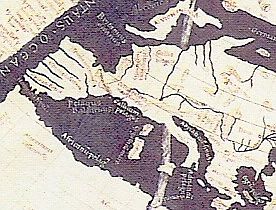
Post-DVC, it seems to be coming into more general usage due to novels, TV shows and games using the title, which offers the appeal of a close variant on the already-overused word Code. There’s Douglas Preston’s The Codex, which seems to be a family-inheritance treasure hunt related to Mayan codices that may hold the cure to cancer. There’s plain Codex (no “The”) by Lev Grossman, a “cerebral thriller”, which Amazon says deals with mediaeval literature and a related computer game, thus offering “an added twist for the technophile” in “the emerging genre of literary history thrillers.” A series of novels (Celtika, The Iron Grail) from fantasy author Robert Holdstock (of Mythago Wood fame), is called The Merlin Codex, where the codex in question purports to be Merlin’s real story, his autobiography that he notionally left behind for posterity as a handwritten manuscript.There’s even a game show: Channel 4’s latest attempt to cater to the Da Vinci Code market this winter has been a Sunday-evening game show hosted by Tony Robinson, the actor who followed up playing Baldrick on BBC’s cult historical sitcom Blackadder by presenting history documentary series – C4’s long-running Time Team, and last year’s The Real Da Vinci Code (reviewed here earlier). C4’s Codex series involves a team locked in the British Museum at night and having to solve a set of riddles and puzzles about an ancient civilisation.Excerpt from Ptolemy atlas showing early Europe, with key descriptionsThe C4 show uses ‘the codex’ to mean a cylinder containing a parchment scroll with a secret on it. In TDVC Dan Brown posited such a cylinder, which he named a cryptex, which had a combination-lock set of rotatable dials reminiscent of the German WWII Enigma machine. If you just broke it open, a glass vial would release the vinegar inside, turning the papyrus into mush, as happens in the end. I’ve always been suspicious about this. There’s an expression in British politics that today’s news is just tomorrow’s fish‘n chip wrapping. This derives from the fact that before the EU’s Codex Alimentarius was brought in to regulate British food, fish‘n chip shops used newspaper as insulation-wrapping. And even when the chips were so soaked in vinegar it penetrated right through, it did not eat away the newspaper but left the newsprint still visible. Now a palaeographer who was also suspicious of this plot device has done tests showing that vinegar will not dissolve, or even damage, ancient papyrus….. All that trouble, when anybody who got their hands on that cryptex over the centuries could’ve just whacked it open.
Of course there are other codices which have never been found by historians, but which they presume existed as the now-lost sources of surviving early accounts. For example, as indicated in our earlier Ptolemy-map-as-codex item [image detail above], the earliest classical source of information about Britain likely comes from a now-lost periplous, and soon we will take a closer look at that mystery, for it holds a key to the puzzle which is the main subject of this blog.