Showing posts with label Rennes le Chateau. Show all posts

Friday, June 01, 2007

The Grail Mystery Takes A New Turn

The Rennes-le-Chateau mystery which was the centrepiece of the Holy Blood Holy Grail, the bestseller which launched an entire genre of speculative-history literature, has just taken a left turn. This is with publicity over the UK paperback publication of City Of Secrets: The Extraordinary True Story Of The Woman Who Found Herself At The Heart Of The Grail, by the novelist and biographer Patrice Chaplin. Oddly, a web search shows the book is not actually new, as press coverage implies, but evidently publication of a new UK paperback edition May 25th has just brought it to the notice of those who keep an eye on the Rennes mystery.
Because of her marriage to the son of film star Charlie Chaplin (who spent his last years in Europe), the British-born and now London-resident author lived in Europe as well as Hollywood and was part of a circle of artists like Umberto Eco, Dali and Debussy. (These two of course were named in various dubious documents quoted by HBHG etc as Grand Masters of the notional ‘Priory Of Sion’). She was also the lover of a Spaniard 'initiate' of a secret society, who told her the secret the Rennes-le-Chateau priest Sauniere was involved with so she could write a book about it, before the secret was lost forever. For Chaplin is a professional writer of long standing whose work has sometimes dealt with occult matters. Her writing includes a journey-into-death fable called Siesta, a novel which may have been inspired by her appearing in films by Jean Cocteau (a friend of her lover Jose), for the story has shades of his classic version of the legend of Orpheus in the Underworld, Orphee. A decade before the 1999 Bruce Willis film The Sixth Sense, her 1979 novel was filmed starring Ellen Barkin as a woman who doesn't understand she's dead; she journeys through Spain meeting former acquaintances who give her certain clues leading her finally to realise she is in an underworld limbo.
After he had a near-death experience, Chaplin’s lover Jose gave her certain information he and his fellow members wanted passed on. Chaplin says the Rennes secrets are related those of the Kabbalah, the Jewish mystical text which supposedly contains codes concealing powerful occult numbers (such as 22), which in this case were used as building dimensions for purpose-built towers. She documents how the Tour Magdala (Tower of Mary Magdalene) the priest Sauniere financed outside Rennes was a copy of one built by a private group in the Spanish city of Girona.
cover of Patrice Chaplin book
This eastern-Pyrenean town near the French border south of Rennes-le-Chateau area is the ancient Catalan capital where she took up residence, this being the "city of secrets" the book’s title refers to. (She says she was followed by men-in-black type state security agents acting on behalf of the secret society, and photos she was given were doctored in a way that would have discredited her book.) With its grail traditions and ancient Jewish quarter containing a famous mediaeval school studying the Kabbalah, it was a centre of mystical studies until 1492, when the Spanish crown with the backing of the Church ordered all Jews out of Spain, ending the ‘Golden Age’ of learning.
She says the towers formed a triangular alignment with St Sulpice in Paris (the church in The Da Vinci Code) a mystical triangle known as ‘the Golden Cut.’ The towers were used to obtain magnetic energies for a ritual that allowed them to visit other dimensions. This, she said, is the real Grail: a two-hour-long ritual of recited texts enabling someone to pass through a trans-dimensional portal to enlightenment. But if you are not spiritually fit, you could go mad or die, which is what she suggest happened to some of Sauniere's helpers. The key to ‘activating’ the Grail was a large stone called the Sun Stone.
The Rennes priest Sauniere himself visited for twenty years, being secretly paid by (wait for it) the Rosicrucian Order and the Bilderberg Group. The Rosicrucians, or Order Of The Rosy Cross, are of course often named in conspiracy literature, usually as the ones who took over the secrets of the Knights Templar when the Church suppressed them in 1307. The Bilderberg Group are a top-echelon secretive business-conference formation, who along with the Illuminati (the subject of Dan Brown's next novel) are the conspiracy theorists' favourite prime suspect. But Chaplin’s lover, who she says was also a Freemason of the Scottish Rite, and other members of this private society (not the Priory of Sion but the "Friends Of Ancient Girona") fell into strife as one by one their age group began to die off. They couldn’t agree whom to give their secrets or artefacts to - the Bilderberg people, the Freemasons, or the Church, eventually hiding them on a mountain that lies in a straight line between the two towers. The mountain is the sacred centre of Catalonia, where the summer solstice is celebrated. On it is a monastery dedicated to St Sulpice (again, shades of Da Vinci Code here, and the alleged “Rosy Cross” line) … and, says Chaplin, an invisible gateway to another dimension where lie powers that could destroy the planet as we know it.
… So we have a modern secret society with associated celebrity names protecting a mighty grail secret, clues in an ancient text whose study is forbidden to women, containing a secret code used in the dimensions of sacred buildings, a bit of suppression by the Catholic Church, and an ultimate power which “in the wrong hands …would have cast the world as we know it into darkness.”
Sounds to me like there's a bestseller and a movie there to rival The Da Vinci Code.

Monday, October 30, 2006

Les Dossiers Secrets, Revisited

Ever since I read Baigent, Leigh & Lincoln’s Holy Blood, Holy Grail when it first came out some twenty-five years ago, I’ve wondered about a contemporary political agenda behind such ‘occult’ organisations as the Priory Of Sion which suddenly appear out of the shadows but claim ancient roots that would give them political precedence, or at least great influence, in the event of a major national socio-political crisis or shakeup. (And what could entitle an organisation to greater precedence than representing descendants of the Holy Family?) To be fair to the HBHG authors, they did not themselves act as believers but presented themselves openly in the text as investigators of an unresolved mystery, but subsequent books have added rather uncritically to the Priory claims they documented in the ‘Dossiers Secrets’ planted in the French national archives. Debunking websites and the odd book have then inevitably appeared, rubbishing the believers’ claims or evidence, and claiming the whole affair was an admitted hoax, a juvenile ‘prank’ by Pierre Plantard, the Marquis de Cherisey, and a couple of friends. (This debunking goes back to a 1996 BBC Timewatch documentary. For details of these and other pro- and con- works, click the link to our Study Resources Page at right.)
The Sion Revelation,upcoming paperback editionHowever in Clive Prince & Lynn Picknett's recent The Sion Revelation we finally have a work (which the authors say is the product of ten years research) that looks beyond the it’s-all-true/ it’s-all-rubbish categorically opposed positions of the believers and the debunkers. It explores in detail the background politics behind the Priory as a front organisation that emerged from the war, adopting the French Resistance’s use of innocuous-seeming messages, such as lines of poetry, as codes. (This is a technique that will be familiar to anyone who has seen or read The Longest Day). It traces how the principal ‘hoaxer’ Plantard was aiding one contender after another who might be a strong, traditionalist leader of France: first the wartime collaborationist Vichy Regime of Marshall Petain, then De Gaulle in his 1950s comeback, and finally President Mitterrand around 1980, when HBHG was being prepared.
It goes back over the planting in the national archives of each batch of Les Dossiers Secrets which were the basis of much of HBHG, each adding to or modifying the scenario to manipulate the HBHG and later authors in a semi-improvised campaign of disinformation and misdirection. In fact, it largely goes over the same ground as HBGH but offers a revisionist political interpretation of events in the light of post-1982 evidence. For instance, Sauniere, the 19th-C. parish priest at the centre of the Rennes mystery, is characterised as mainly a virulent opponent of Republicanism, which he equated with a 'Judeo-Masonic' [sic] conspiracy. He used much of his mysterious wealth (which the authors suggest was payment for hunting for key genealogical documents proving local land titles, rather than by blackmailing the Vatican or finding a gold hoard) to redecorate his church in unorthodox ways some have taken as treasure clues. He did this as a protest at the defilement of the French church which since Napoleon were state-supervised, operating under the thumb of the hated Republic, and his actions caused a rift with church superiors, who suspended him.
It also challenges the professional debunkers for accepting stories (like the one that Plantard admitted to a judge he had made the whole thing up) without evidence – the sin they accused others of. The debunkers were also so focussed on doing an expose they didn’t enquire too closely into the motives for such a long-lasting prank or hoax and the subsequent ‘admissions’ e.g. by the Marquis de Cherisey that he had made the whole code up himself as a harmless prank, a puzzle for others to solve. The book says the de Cherisey code is in fact unbreakable even using modern computer analysis, since it depends on possessing the alphabetic key, as with the “onetime pads” used by the Resistance. The key here turns out to be 128 letters long, an anagram reversing a gravestone inscription, with letters added from a second claimed (probably nonexistent) inscription, the result being shifted one letter down the alphabet, and then run twice through a “Knight’s Tour” (a form of encryption using a famously difficult chess manoeuvre to generate a unique, encircling chessboard pattern), and then through another letter-substitution grid invented by a mentor of Da Vinci, known as a Vigenere Square - twice, the 2nd time using a different and secret keyword. The end product in any case is itself a poetic riddle akin to a set of crossword clues jumbled together (supposedly local place-name treasure-hunt clues), about Poussin, Teniers, the horse of god, a demon guardian, and blue apples - which (as we know from that Timewatch documentary) is itself capable of more than one interpretation. Some puzzle!
They conclude Plantard was indeed a media hoaxer, but one acting from lifelong political interests on behalf of a cryptofascist movement with various fronts or faces, which is working to help put in place a Catholic-traditionalist style presidential equivalent of their roi perdu – France’s lost monarchy - which can contend for control of a united Europe.
PS As a result of reading an incidental passage in this book, I’ve also added a paragraph to my earlier item, Was What Sauniere Found A ‘Codex’?

Wednesday, September 13, 2006

Was What Sauniere Found A Codex?

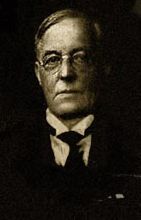
M.R. James portrait photoWas what began the Rennes-le-Chateau mystery really Abbe Sauniere’s finding a ‘codex’ scrapbook - and did discovering this three years later inspire the 'Father of the Ghost Story'?
Pictured: M.R. James, 'Father Of The Ghost Story', whose interest in exploring relics in historic French churches seems to have led him to a disturbing conclusion about the nature of their secrets ...
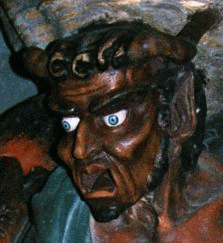
The Rennes church demon-guardian
Because of the blog’s title, I thought it might be worth discussing this recent theory regarding the secret of Rennes-le-Chateau, as a lost codex. The theory concerns how M.R. James, ‘the Father of the Modern Ghost Story', launched his writing career after a visit to a village in the Rennes-le-Chateau area. James was a scholar, a Cambridge academic, whose field was paleography: the study of old documents such as mediaeval manuscripts, which were often collected and bound as codices – sewn together in the manner of a scrapbook. He wrote nonfiction books on church art and architecture, and apocryphal Biblical lore. He also specialised in the ‘antiquarian ghost story.’ Old manuscripts, codexes, and other documents are often a plot springboard of MRJ’s ghost stories, used to create verisimilitude – via what The Wordsworth Companion To Literature refers to as ‘scholarly details.’ His first-ever story, ‘Canon Alberic’s Scrap Book,’ was written just after he visited a church not far from R-L-C in 1892. This spring, in Fortean Times, Nick Warren argued that the story was based on rumours then in circulation about what Abbe Sauniere had found at nearby Rennes-le-Chateau that made him rich. If this is so, the story is of interest due to its early date, contemporary with the life and times of Abbe Sauniere, and long before the now so familiar modern R-L-C theories appeared. Did he by chance hear the original, contemporary version regarding what Sauniere had found?
The story’s setting is a ex-cathedral church in the same region of France as Rennes-le-Chateau, St Bertrand de Comminges. The church, which has its own crocodile-type ‘dragon’ (killed by St Bertrand), was built by the local Bishop who became the Pope who had helped destroy the Templars, and one of whose descendants lived in R-L-C Castle, her sepulchre, says Warren, giving Sauniere clues to the hidden treasure (whatever that was). A footnote in Laurence Gardner’s 2005 book, The Magdalene Legacy, offers a link for anyone interested in MRJ in relation to the HBHG mystery. This notes Stewart Perowne’s 1958 book The Later Herods [Ch 10, p69] cites Josephus’ Wars Of The Jews (a 1st-C AD account) that the sons of Herod the Great in later life were exiled and sought sanctuary in this area of France. Herod-Antipas of Galilee retired to the village MRJ mentions as his inspiration, St Bertrand de Comminges. Presumably the choice of this locality was because this corner of France was what other writers have characterised as a ‘Jewish Princedom’, the colony building up after the fall of Jerusalem in AD 72. Whether any relevant relics like Biblical manuscripts came with these exiles remains unknown.
The MRJ story has a frightened local sacristan or verger gladly selling the narrator a rare scrapbook-codex of centuries-old pages, together with a plan of the cathedral encoded with magic symbols, which the now-dead Canon Alberic tried to interpret to search for lost treasure. It also has a drawing of Solomon facing down the demon or dragon who guards the Temple gold. This ‘appalling effigy’, an Old Testament demon, then materialises to the new owner of the manuscript when he takes off his crucifix. In another story, ‘The Treasure Of Abbot Thomas,’ the antiquarian storyteller deciphers a biblical code sequence hidden in the artwork of an old chapel, leading to a treasure behind a keystone, again guarded by a ghoul. In fact, most of MRJ’s subsequent stories had a similar setup. Told in the first person as if they actually happened to the author or to a friend of his, a travelling scholar or antiquary happens on some papers or treasure, possessing which unleashes some occult force. Usually, a shadowy figure begins to stalk him, leading to death, madness, or flight. The plot setup obviously had a great impact not only for James but for others, for his stories have never been out of print since 1904.
Patrice Chaplin in her documentary account of the Rennes-le-Chateau mystery's Cabalistic links, City Of Secrets (2007), reports a nasty encounter with a ghoul when she entered the Rennes-le-Chateau church in the 1960s, which she described in terms that would have suited an MRJ story. She said it was "very much in the realms of darkness….. It had a depressing and powerful enmity about it. I don’t know if it was meant to warn me off I have no idea, but I ran out of there screaming…. I think it left a darkness inside of me."
Nick Warren implies Sauniere had a vision of such a ghoul, commemorated in the vivid full-colour sculpture of the swarthy, red-eyed horned-demon painted wooden sculpture seen in the R-L-C church, and now on various websites [pictured above], where the Latin inscription over the door says 'Terrible Is This Place.’ He speculates what Sauniere may have found was such a scrapbook-codex containing old pages with heretical (Templar?) content that would have embarrassed the Vatican, allowing him to overcome his demons, accumulate vast wealth, rebuild the church and, supposedly, leave architectural clues dotted around the landscape. While demonic hauntings do not figure much in the modern round of R-L-C books I have seen, the Templars were certainly accused of consorting with a demon whose head they worshipped. This may be why the label le tresor maudit or ‘the accursed treasure’ was used by Gerard de Sede as the title for the first of these modern books. Of course, if it was a codex-scrapbook of pages culled from old manuscripts, the question remains, what could have been there that was so frightening? Whatever the Sauniere secret was, it certainly seems to have upset the church - there's a story Sauniere was even refused absolution on his death-bed when he confessed his secrets. The Church tended to denounce heretical works as creations of the Devil, which could explain how the idea of a demon came to be associated with such a mystery.
Clive Prince & Lynn Picknett's recent The Sion Revelation [p251] notes other published authors seem to have heard rumours about the Rennes mystery around this time: e.g. the Arsene Lupin novels [1907-] of Maurice Leblanc, where Lupin is in plots 'that can appear unsettling when we know the story'; and Jules Verne's 1896 adventure Clovis Dardentor, where the hero has the first name of a Merovingian king and a surname said to mean "of the descendants' gold" (using the same root as Plant-Ard). And in Huysmans’s notorious 1891 novel of Satanism in 19thC Paris, La-Bas, the setting includes the strange Church of St Sulpice, which features in The Da Vinci Code.
The controversial Dossiers Secrets, which HBHG was largely based on, refer to a curse (hence the title of de Sede's book, The Accursed Treasure) The message Henry Lincoln decoded (this is how the whole HBHG enterprise began) from the parchments reproduced in de Sede's book, A SION EST CE TRESOR ET IL EST LA MORT could be translated similarly to mean ‘At [Mt] Sion is this treasure and it is Death.’ (la mort) As Prince & Picknett put it, "the treasure in some way brings death", the parchment ‘cursing the miscreant who dares steal a fragment of this treasure'. The solution to the now-famous parchment's riddle mentions both Poussin, the painter of the Arcadian scene, and a demon guardian. Les Dossiers Secrets say that the 7th-C Merovingian dynasty, on losing power to the Carolingians, hid their treasure in this area. A curse was put on it to protect it, which was what supposedly caused Sauniere to fall from grace, be put out of a job in 1910 by his Bishop, and be ordered to Rome to face charges. He had introduced 'satanic' elements into the church which his mysterious wealth had rebuilt, such as having the stations of the Cross run counter-clockwise, and a grinning demon [pictured] holding up the water stoup. He also had a dog he named Faust, after the character who sold his soul to the Devil in exchange for mortal advantage.
Of course the motto made famous by Poussin, Et Ego In Arcadia, said to be on a tombstone Sauniere covered up, can refer to Death or any other figure one whould not expect in Arcadia. The motto appeared in an 1832 travel book on the area by a friend of Victor Hugo's, which also referred to the "Devil's treasure" being there. Another aspect suggested by Sauniere’s odd behaviour is that if the documents he found referred to some terrible secret about Christianity such as that Jesus had survived, been married, perhaps had children, then this discovery in itself would be akin to a curse, for how could a man of the church carry on with his duties while keeping such a terrible secret?
Further Reading & Viewing: If you want to explore this approach further, Nick Warren’s article ‘An Accursed Treasure’ is in Fortean Times #206 [Feb 2006 – article not archived online yet]. The magazine also carried a feature by Picknett & Prince in their July issue, #212. Even if you’ve never even heard of Montague Rhodes James, you may still have come across his work via a film or TV adaptation (On the other hand you may just think you’ve seen adaptations because his work has been so widely imitated.) The most famous film version is the 1958 classic Night Of The Demon directed by Jacques Tourner, based on MRJ’s story ‘Casting The Runes.’ (In it, an Aleister Crowley type of figure discovers the terrible price that must be paid after he conjures up a demon using an old book of spells he stole from the British Museum.) A 1989 Italian horror film scripted by Dario Argento, La Chiesa (English title The Church), was inspired by ‘The Treasure Of Abbot Thomas.’ On TV, the first seems to have been a 2-part dramatisation of ‘Canon Alberic’s Scrap Book’ directed by Tony Richards in 1954. BBC did a famous b&w adaptation of MRJ’s tale of a dangerous Templar relic, “Whistle, And I’ll Come To You, My Lad” directed by Jonathan Miller, available on DVD from the BFI, with excerpts viewable online). From 1971-8, BBC-TV produced 5 MRJ ghost stories as part of its annual “A Ghost Story For Christmas” series, including ‘The Treasure Of Abbot Thomas’ and ‘A Warning To The Curious’. The latter is the most famous of the 5, is also available on DVD from the BFI. The stories were meant to be read aloud at social gatherings, and make natural source material for radio and talking-book adaptations, of which there are many. For links to etexts, click here [scroll down] or here. ‘Canon Alberic’s Scrap Book’ is here, and there is a study-guide PDF to it here [right-click to download]. MRJ’s story and own visit to St Bertrand de Comminges is discussed in ‘The Jamesian Traveller’ series on the MRJ fansite, here. Fortean Times March 2007 issue says MRJ’s work came out of copyright at the end of 2006, and a ‘flurry’ of new adaptations is expected.

Tuesday, May 30, 2006

Was What Sauniere Found A ‘Codex’?

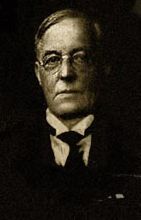
Was what began the Rennes-le-Chateau mystery really Abbe Sauniere’s finding a ‘codex’ scrapbook? And did discovering this three years later inspire the 'Father of the Ghost Story'?


Pictured: M.R. James, 'Father Of The Ghost Story', whose interest in exploring relics in historic French churches seems to have led him to a disturbing conclusion about the nature of their secrets ...

Because of the blog’s title, I thought it might be worth looking into a recent theory regarding the secret of Rennes-le-Chateau as a lost codex. The theory concerns how M.R. James, ‘the Father of the Modern Ghost Story', launched his writing career after a visit to a village in the Rennes-le-Chateau area. James was a scholar, a Cambridge academic, whose field was paleography: the study of old documents such as mediaeval manuscripts, which were often collected and bound as codices – sewn together in the manner of a scrapbook. He wrote nonfiction books on church art and architecture, and apocryphal Biblical lore. He also specialised in the ‘antiquarian ghost story.’ Old manuscripts, codexes, and other documents are often a plot springboard of MRJ’s ghost stories, used to create verisimilitude – via what The Wordsworth Companion To Literature refers to as ‘scholarly details.’ His first-ever story, ‘Canon Alberic’s Scrap Book,’ was written just after he visited a church not far from R-L-C in 1892. This spring, in Fortean Times, Nick Warren argued that the story was based on rumours then in circulation about what Abbe Sauniere had found at nearby Rennes-le-Chateau that made him rich. If this is so, the story is of interest due to its early date, contemporary with the life and times of Abbe Sauniere, and long before the now-so-familiar modern R-L-C theories appeared. Did he by chance hear the original, contemporary version regarding what Sauniere had found?
The story’s setting is an ex-cathedral church in the same region of France as Rennes-le-Chateau, St Bertrand de Comminges. The church was built by the local Bishop who became the Pope who had helped destroy the Templars, and one of whose descendants lived in R-L-C Castle. Her sepulchre, says Warren, gave Sauniere clues to the hidden treasure - whatever that was.
Could this treasure have had any link with the HBHG mystery? Was there any connection between this part of France and the Holy Lands in the post-Crucifixion period, when apostles were said to have fled to Europe, bringing holy relics? The Jewish historian Josephus, who wrote two historical accounts after he was captured during the Jewish revolt in Galilee and became a Roman citizen, said that when the pro-Roman Herod Agrippa was made king of the Jews, Rome exiled one of Herod the Great's surviving sons there in AD 39. (Herod Agrippa was Josephus’s source for much of his historical writings.) This unwanted heir was retired to the family estate in a remote part of the Roman province of Spain. The Rennes locality of course is not in modern Spain but is nestled in the foothills of the Pyrenees forming the present Spanish-French border. He was exiled to the Roman colony-town of Vienne, near Lyon north of Massilia (Marseilles). Massilia was the landfall port for Palestian and other traders following the overland tin-trade route across Gaul to southwest Britain, and so is on our ‘grail trail’ in relation to Joseph of Arimatheia et al. Laurence Gardner’s 2005 book The Magdalene Legacy cites Stewart Perowne’s 1958 book The Later Herods [Ch 10, p69] as the authority on this, which itself cites Josephus’ Wars Of The Jews that both sons of Herod the Great were exiled to this area. (Josephus was the earliest writer to mention Jesus and his brother and successor James, though later manuscript alterations by church fathers are suspected. For the page references in Josephus, see the Wikipedia entry for Herod Antipas, which also explains the manuscript copyist’s France-Spain geographical confusion.) The other surviving son, Herod Antipas, who ruled Galilee at the time of the Crucifixion, was also exiled in AD 39, ending up in … St Bertrand de Comminges - the same village MRJ wrote of. This corner of France was what other writers have characterised as a ‘Jewish Princedom’, the colony building up after the massive Jewish revolt Josephus wrote of as the Jewish Wars, which ended with the fall of Jerusalem in AD 70. Whether any relevant relics like Galilean Biblical manuscripts came with these exiles however remains an unanswered question.
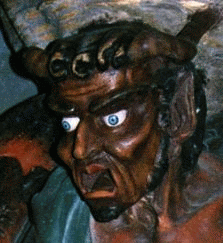
The MRJ story has a frightened local sacristan or verger gladly selling the narrator a rare scrapbook-codex of centuries-old pages, together with a plan of the cathedral encoded with magic symbols, which the now-dead Canon Alberic tried to interpret to search for lost treasure. It also has a drawing of Solomon facing down the demon or dragon who guards the Temple gold. This ‘appalling effigy’, an Old Testament demon, then materialises to the new owner of the manuscript when he takes off his crucifix. In another story, ‘The Treasure Of Abbot Thomas,’ the antiquarian storyteller deciphers a biblical code sequence hidden in the artwork of an old chapel, leading to a treasure behind a keystone, again guarded by a ghoul. In fact, most of MRJ’s subsequent stories had a similar setup. Told in the first person as if the events had actually happened to the author or to a friend of his, a travelling scholar or antiquary happens on some papers or treasure, possessing which unleashes some occult force. Usually, a shadowy figure begins to stalk him, leading to death, madness, or flight. The plot setup obviously had a great impact not only for James but for others, for his stories have never been out of print since 1904.The Rennes church demon-guardian
Nick Warren implies Sauniere had a vision of such a ghoul, commemorated in the vivid full-colour sculpture of the swarthy, red-eyed horned-demon painted wooden sculpture seen in the R-L-C church, and now on various websites [pictured], where the Latin inscription over the door says 'Terrible Is This Place.’ He speculates what Sauniere may have found was such a scrapbook-codex containing old pages with heretical (Templar?) content that would have embarrassed the Vatican, allowing him to overcome his demons, accumulate vast wealth, rebuild the church and, supposedly, leave architectural clues dotted around the landscape. While demonic hauntings do not figure much in the modern round of R-L-C books I have seen, the Templars were certainly accused of consorting with a demon whose head they worshipped. This may be why the label le tresor maudit or ‘the accursed treasure’ was used by Gerard de Sede as the title for the first of these modern books. Of course, if it was a codex-scrapbook of pages culled from old manuscripts, the question remains, what could have been there that was so frightening? Whatever the Sauniere secret was, it certainly seems to have upset the church - there's a story Sauniere was even refused absolution on his death-bed when he confessed his secrets. The Church tended to denounce heretical works as creations of the Devil, which could explain how the idea of a demon came to be associated with such a mystery.
Clive Prince & Lynn Picknett's recent The Sion Revelation [p251] notes other published authors seem to have heard rumours about the Rennes-le-Chateau mystery around this time: e.g. the Arsene Lupin novels [1907-] of Maurice Leblanc, where Lupin is in plots 'that can appear unsettling when we know the story'; and Jules Verne's 1896 adventure Clovis Dardentor, where the hero has the first name of a Merovingian king and a surname said to mean "of the descendants' gold" (using the same root as Plant-Ard). And in Huysmans’s notorious 1891 novel of Satanism in 19th-C Paris, La-Bas, the setting includes the strange Church of St Sulpice which features in The Da Vinci Code.
The controversial Dossiers Secrets, which HBHG was largely based on, refer to a curse - hence the title of de Sede's book, Le Tresor Maudit - The Accursed Treasure. (The "worst" swear-words a Catholic can utter are maudit tabernacle.) The message Henry Lincoln decoded (this is how the whole HBHG enterprise began) from the parchments reproduced in de Sede's book, A SION EST CE TRESOR ET IL EST LA MORT could be translated similarly to mean ‘At [Mt] Sion is this treasure and it is Death.’ As Prince & Picknett put it, "the treasure in some way brings death", the parchment ‘cursing the miscreant who dares steal a fragment of this treasure'. The solution to the now-famous parchment's riddle mentions both Poussin, the painter of the Arcadian scene, and a demon guardian. Les Dossiers Secrets say that the 7th-C Merovingian dynasty, on losing power to the Carolingians, hid their treasure in this area. A curse was put on it to protect it, which was what supposedly caused Sauniere to fall from grace, be put out of a job in 1910 by his Bishop, and be ordered to Rome to face charges. He had introduced 'satanic' elements into the church which his mysterious wealth had rebuilt, such as having the stations of the Cross run counter-clockwise, and the demon pictured holding up the water stoup. He also had a dog he named Faust, after the character who sold his soul to the Devil in exchange for mortal advantage.
Of course the motto made famous by Poussin, Et Ego In Arcadia, said to be on a tombstone Sauniere covered up, can refer to Death or any other figure one whould not expect in Arcadia. The motto appeared in an 1832 travel book on the area by a friend of Victor Hugo's, which also referred to the "Devil's treasure" being there. Another aspect suggested by Sauniere’s odd behaviour is that if the documents he found referred to some terrible secret about Christianity such as that Jesus had survived, been married, perhaps had children, then this discovery in itself would be akin to a curse, for how could a man of the church carry on with his duties while keeping such a terrible secret?
Further Reading & Viewing: If you want to explore this approach further, Nick Warren’s article ‘An Accursed Treasure’ is in Fortean Times #206 [Feb 2006 – article not archived online yet]. The magazine also carried a feature by Picknett & Prince in their July issue, #212. For a commentary on the "demonology" of "Canon Alberic's Scrap-book", see the online essay The Nature of the Beast by Helen Grant. Even if you’ve never even heard of Montague Rhodes James, you may still have come across his work via a film or TV adaptation. (On the other hand you may just think you’ve seen adaptations because his work has been so widely imitated.) The most famous film version is the 1958 classic Night Of The Demon directed by Jacques Tourner, based on MRJ’s story ‘Casting The Runes.’ (In it, an Aleister Crowley type of figure discovers the terrible price that must be paid after he conjures up a demon using an old book of spells he stole from the British Museum.) A 1989 Italian horror film scripted by Dario Argento, La Chiesa (English title The Church), was inspired by ‘The Treasure Of Abbot Thomas.’ On TV, the first seems to have been a 2-part dramatisation of ‘Canon Alberic’s Scrap Book’ directed by Tony Richardson in 1954. BBC did a famous b&w adaptation of MRJ’s tale of a dangerous Templar relic, “Whistle, And I’ll Come To You, My Lad” directed by Jonathan Miller, available on DVD from the BFI, with excerpts viewable online). From 1971-8, BBC-TV produced 5 MRJ ghost stories as part of its annual “A Ghost Story For Christmas” series, including ‘The Treasure Of Abbot Thomas’ and ‘A Warning To The Curious’. The latter is the most famous of the 5, and is available on DVD from the BFI. The stories were meant to be read aloud at social gatherings, and make natural source material for radio and talking-book adaptations, of which there are many. For links to etexts, click here [scroll down] or here. ‘Canon Alberic’s Scrap Book’ is here, and there is a study-guide PDF to it here [right-click to download]. MRJ’s story and own visit to St Bertrand de Comminges is discussed in ‘The Jamesian Traveller’ series on the MRJ fansite, here. Fortean Times March 2007 issue says MRJ’s work came out of copyright at the end of 2006, and a ‘flurry’ of new adaptations is expected.